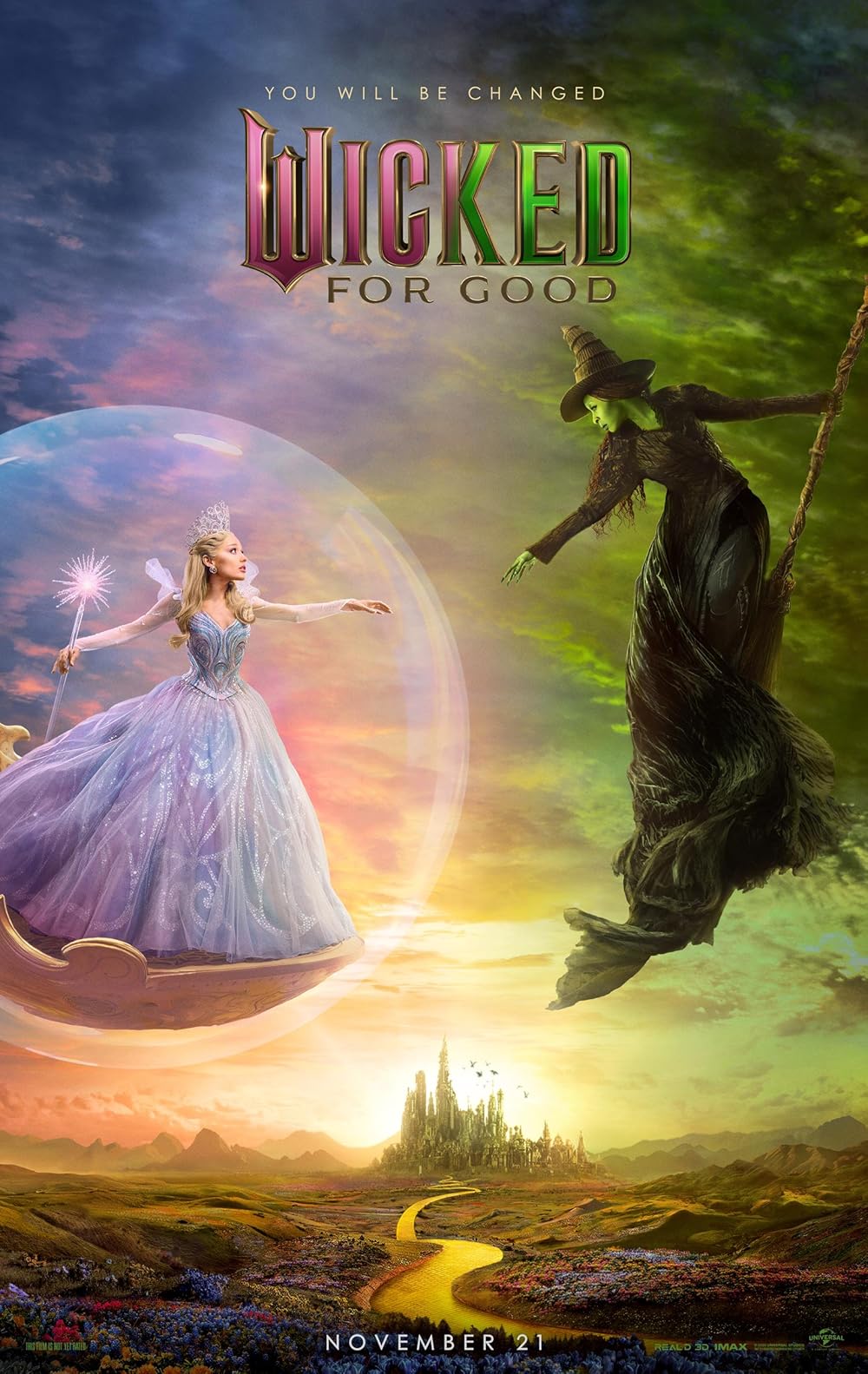
Good to finally see it, isn’t it? After a torturous year of not-so-patiently waiting for Wicked: For Good, millions of fans finally witnessed the epic conclusion of Elphaba and Glinda’s tale. I, for one, was obsessed with the whole production, but the film’s rollout style remains contentious among critics and cinephiles alike. The cliffhanger and 12-month-long suspension between films were less-than-wonderful experiences, but it seems that this new popular precedent in entertainment might actually be a change for the better.
While the anticipation caused by the two-part release defied the craving for satisfaction, it did not defy the gravity of the deeply emotional story. Renowned for its intricate narrative, Wicked is comprised of several meticulously crafted subplots, all of which are essential to the story as a whole. As such, a single three-hour-max film would have neglected to capture the subtleties that make the story what it is. Director Jon M. Chu mastered profound emotional substance and nuanced visual and lyrical storytelling, all while doing justice to a notoriously convoluted tale. In such a binge-culture, forcing us to revisit and rethink the tale for the year resurrected a much-missed delayed gratification and appreciation for entertainment as art. The impact of this movie was unlimited by allowing the story to linger on screen.
Being the entire Broadway musical only runs about two and a half hours, the two movies did not need the composite five-hour run time. However, acting onstage is a wholly different endeavor than in screen adaptations. What thrives in the immediacy of live performance demands far more time on the screen, and giving the story enough time to breathe across the five hours and subsequent two movies was transformative in this regard.
Another large consensus was that the split film method frustrated audiences and delayed momentum. The former I could certainly get behind. To the latter point, I’d contend, conversely, that the anticipation enhanced engagement and resonance. It kept the relevant story alive in cultural conversation for years beyond how long it might have been had the production been expedited and condensed. Mr. Chu’s extension of the tale and its rollout permitted society to interrogate their understanding of true goodness. We owe Mr. Chu some gratitude beyond our indignation.
The Wicked movies offer a compelling case study for the film industry’s evolving approach to storytelling and audience engagement, with two-part releases continuing to challenge expectations and desires. So go on believing what you want to, but I’m going to go against everyone’s favorite good witch and tell you that you can’t have all you ever wanted. We must consider what we truly value in a film, because while “pink goes good with green,” perfection doesn’t go well with instant gratification.