By Elaine Liu
“And today’s lunch is…” The morning announcements crackle from the loudspeakers, as students lean in slightly, clinging to the tiniest bit of hope that today’s lunch menu might be worth looking forward to … until the cruel verdict arrives yet again: “Lo Mein,” which elicits a collective groan.
For many students, Syosset’s introduction to cultural lunches came with high expectations. The Chinese noodle dish lo mein, for example, is typically known for its savory flavors, comforting textures, and delicious array of ingredients from scallions to carrots. Instead, students describe receiving undercooked spaghetti noodles coated in plain soy sauce and accompanied by dry, unappetizing “chicken.”
These reactions are not isolated incidents. In fact, numerous students have commented on what they see as a stark contrast in quality between the school’s virtually inedible cultural lunches and its regular meals.
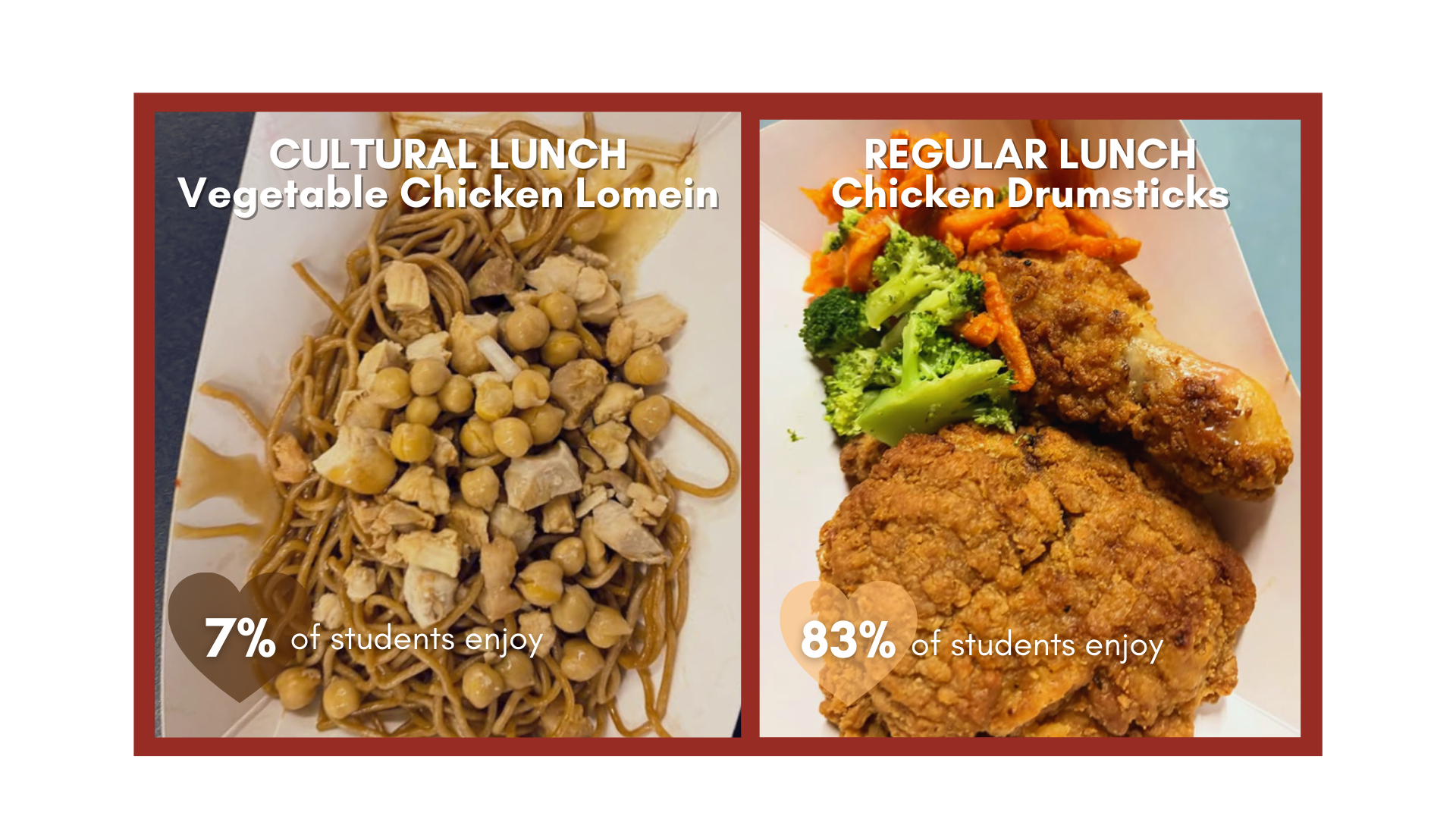
When 36 Syosset High School students were shown a side-by-side comparison of the cafeteria’s chicken lo mein (a cultural dish) and the chicken drumsticks (from the typical menu), their reactions were telling: while 83% believed the drumsticks looked appetizing, only a mere 7% begrudgingly said they would try the lo mein. These responses suggest a broader issue of misrepresentation and poor quality in Syosset High School’s cultural lunches.
In fact, the cultural lunch fiasco has stretched beyond school walls. On an Instagram account reviewing Syosset High School’s everyday lunches, over 27,000 people nationwide openly mocked what Syosset calls “cultural” dishes. Chicken tenders disguised as “orange chicken” and sauceless “stir-fry,” intended to celebrate Syosset’s diverse student body, have instead caused more backlash than praise.
Students say these meals feel less like cultural appreciation and more like a box-checking exercise. Senior Misha Munir said, “I think it’s disappointing that the school has potential to improve, yet doesn’t even though it’s in that same kitchen that masterpieces like the tater tots are whipped up.” Misha noted that this inconsistency was due to the fact that authentic cultural dishes rely on specific ingredients, seasonings, and preparation techniques, which require additional time and resources.
This issue may also sacrifice the positive perceptions that students could develop from trying a new cuisine for the first time. For example, a student sampling ramen may base their opinion entirely on the school’s version. With this, students can feel discouraged from exploring other cultures and appreciating the true quality of dishes they might later encounter in real life.
Building on the lack of resources for diverse dishes, variety is another concern among students. Senior Chloe Wong said, “I personally want to see curry or fried rice in the cafeteria.” Much to students’ dismay, the cafeteria has repeatedly relied on a few selected dishes and hasn’t introduced students to the broad range of cultural cuisines present in the community.
In today’s diverse society, the lack of variety in school lunches could risk exacerbating cultural divides, particularly when students have little exposure to the richness of other traditions that comprise Syosset. Junior Sophia Cheng said, “I think food is magical as it can be a bonding moment for people.” In other words, food acts as a catalyst for connection, one of the simplest ways to start a conversation or learn about a new culture.
With the importance of introducing diverse palettes to different taste buds, many students have proposed changes to the current “cultural” lunch system.
When asked how she would personally change the system, Misha said, “[cultural dishes] should be only one or two days a month, with a different culture each time, rather than once a week.” The school could focus on specific days, such as a “Japanese Food Month,” where food options are carefully curated and authentically prepared. While this may require additional resources for proper ingredients and staff training, it can foster inclusivity and cultural awareness beyond the classroom. This approach may also help cafeteria staff feel less overwhelmed by new recipes and can gradually implement them, rather than attempting to serve unfamiliar dishes spontaneously in a single week.
Others suggest the school dedicate more resources to training cafeteria staff in preparing cultural dishes, especially since many dishes are unfamiliar and it is unclear how they should taste. Sophia said, “Even a 20-minute session could teach staff how to properly prepare a recipe.”
Although school cafeteria staff work tirelessly to provide meals for thousands of people each day, Syosset’s students seem to believe that it is time to rethink the future of school cultural lunches. After all, no one wants to be stuck with a culinary “experiment” that leaves them wondering if they ever truly left Chemistry class.