By: Dania Chaudhry
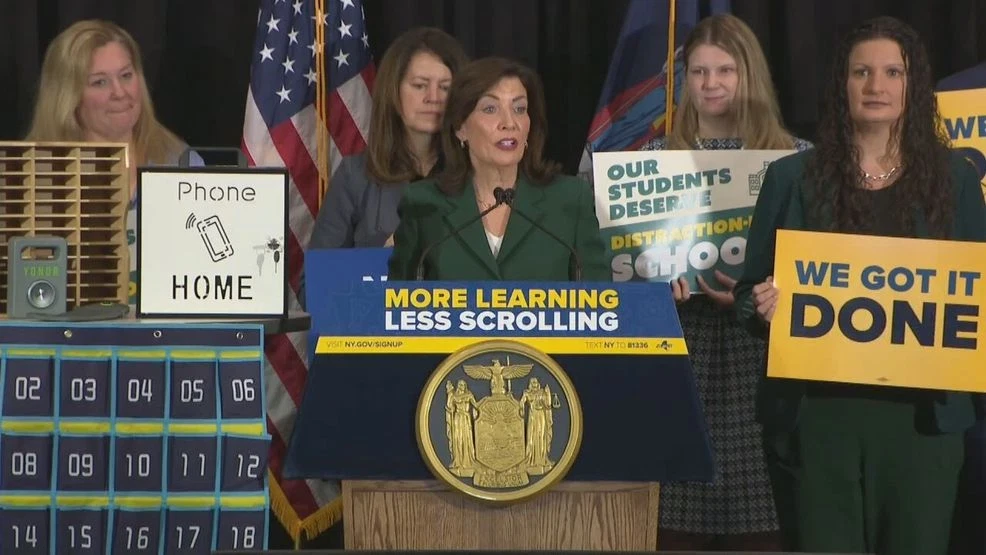
The 2025-2026 school year marked the end of an era. Sitting down during lunch, eating mozzarella sticks, and enjoying looking at Instagram stories used to be a regular scene at high school. This year, all students entered the school year with a hard challenge: getting from the first to the last bell without even glancing at their phones.
A primary purpose of the phone ban was to give students a digital detox, allowing them to focus more on class and increase their participation. According to teachers, this has been effective because the attention and focus have only increased in classrooms. Mr. David Gordon said, “Students are more talkative and engaged.”
Students are not only more academically engaged, but also more socially engaged. Senior Ishal Alladin said, “People are less on their phones, which helps start more conversations.” Freshman Maryann Tsang agreed and said, “The ban helps socializing with new people because people are more approachable when not on their phones.”
In terms of change in comparison to last year, teachers have talked about a positive influence on student discipline. Mr. Gordon said, “Since cell phones have not been out, they [the number of disciplinary actions] have decreased.” Similarly, math teacher Ms. Nicole Spinelli said, “It has definitely helped because I have had to tell people to put phones away much less.” Many teachers then followed with the shared remark that they were happy with the ban and in favor of keeping it.
While the cell phone ban is definitely a sizable adjustment, teachers call it a success, and students say it’s not as bad as they thought it would be. Ishal said, “I only used my phone before school or for music, so now that I’ve converted to an MP3 player, I sometimes forget the phone ban is a thing.”