By: Bhoomi Jobanputra
High schools in the late 1960s and early 1970s were anything but ordinary. For the students who lived through it, high school was not just about classes, clubs, and sports. It was also about a tight-knit community and a time of change. Syosset High School was no different. The Syosset seen today tells a very different story from the one 50 years ago.
Syosset alumnus Richard Nadal explained how those years were defined by music and a camera lens. He reflected on his sophomore year in June 1969, when he attended concerts featuring major acts such as The Who and Steppenwolf, fronted by John Kay, whose hit “Born to Be Wild” became an anthem of the era. Concert tickets were just $7.50, but for Nadal, the experiences became more than just music. “I got so engrossed in photography that the concert was a blur,” he said. Capturing those moments later connected him to the Rock and Roll Hall of Fame. Music was a major part of the culture and the high school experience for many students. Nadal recalled seeing yearbook photos of Edgar Winter, a well-known performer who played at Syosset High School in 1972. Even the school band performed at the New York State Pavilion during the 1964 New York World’s Fair.
At the same time, the 1970s were deeply shaped by politics and social change. As the Vietnam War dominated national conversation, Syosset students made their voices heard. Students organized walkouts advocating for peace and invited speakers through substitute teacher programs that brought activism into daily student life. Organizations such as the Black Panther Party visited the school to speak about civil rights and justice. Change was visible in smaller ways, too. Girls began wearing pants to school, and norms around student expression started to shift. Earth Day, first celebrated in 1970, also left its mark. Emphasizing how students participated in movements far beyond their school walls, Don Kraus said, “I went to the first Earth Day in 1970 in New York City, and we closed Fifth Avenue.”
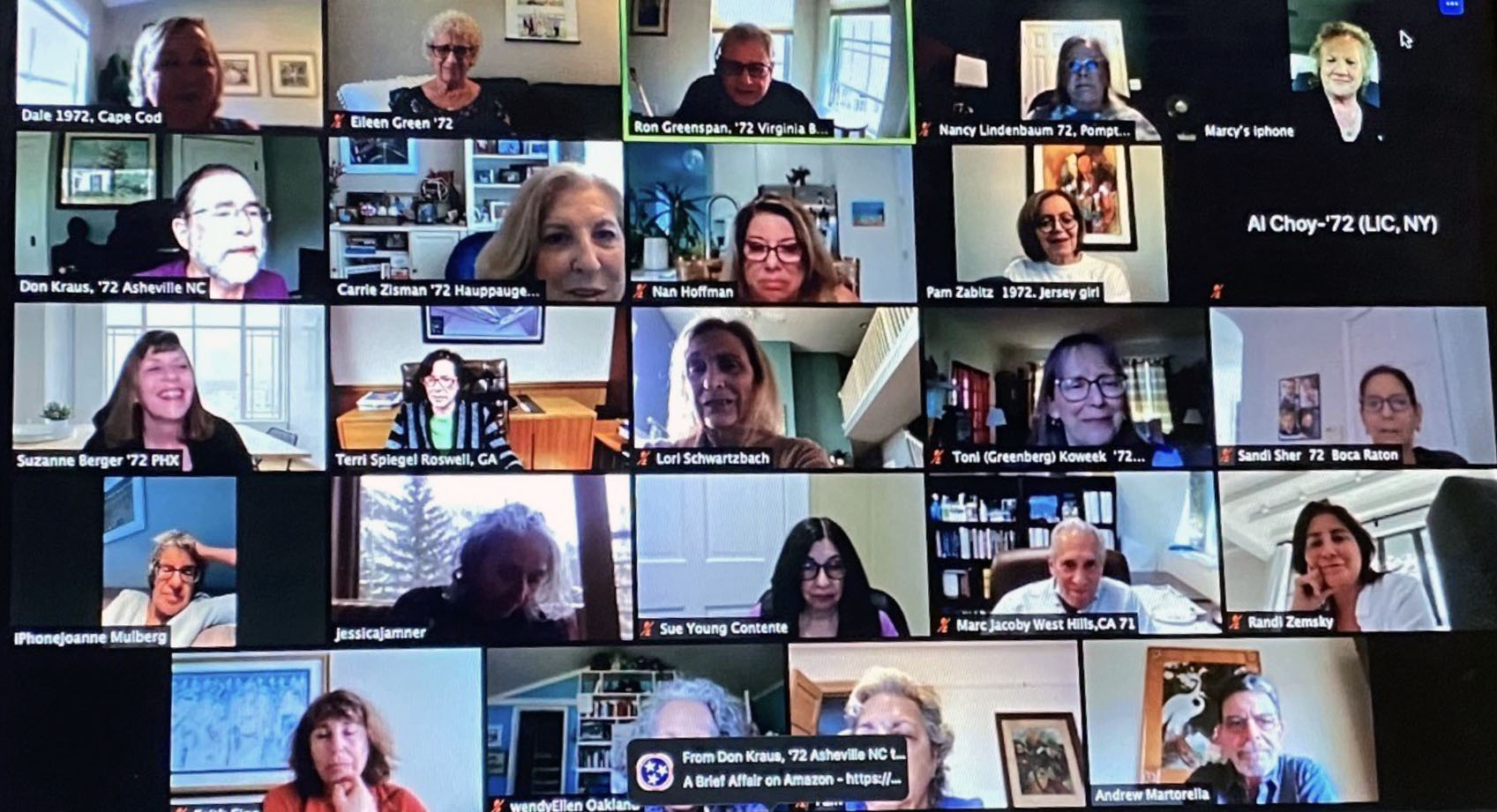
Despite the turbulence of the era, one theme stands out in alumni reflections: connection. The annual senior play, according to Pam Zabitz, was a “binding moment as people who didn’t know each other before came together.” Years later, that sense of togetherness only grew stronger. Ms. Zabitz said, “One thing about Syosset people is that we find each other. Many of us were never really friends in high school, but here we built a community.” That same spirit extended into other pursuits as well. Nita Winter said, “There was a high level of political and humanitarian work. Syosset really supported a lot of our intellectual passions.”
Looking back, Syosset in the 1970s was a snapshot of a generation coming of age during one of the most transformative periods in American history. Even in more unexpected ways, the era reflected a different kind of freedom. Former students recalled open campus spaces, informal hangouts like “the swamp,” and a school culture that felt less rigid than today. Students were part of change, and even decades later, the echoes remain in the community they continue to build.