By: Ella D’Auria
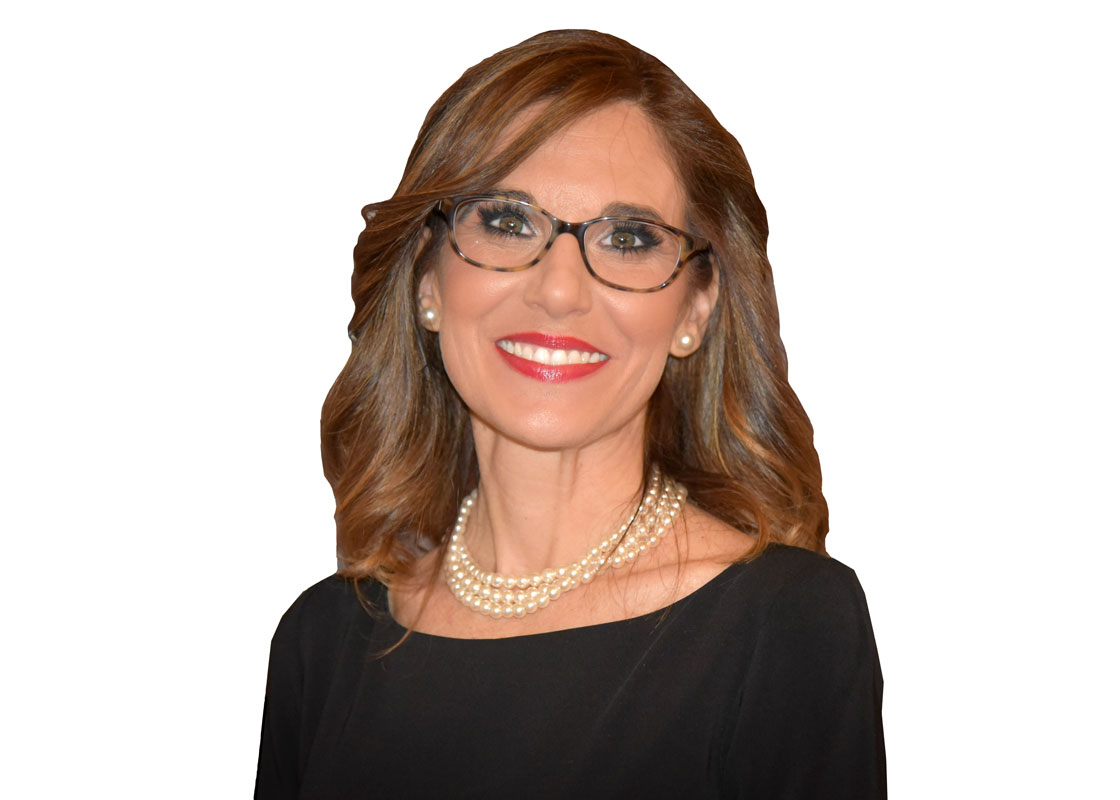
There is no doubt that one of the most debated topics in education is inclusion. Although it is a complicated endeavor that is not always easy to implement, inclusion has the capacity to shape not only students but school communities as well. Ms. Lynda Tine-D’Anna, a Spanish teacher at Syosset, spoke about her experience with inclusion, or, at times, the lack of it, with her daughter, Camilla. “She’s nineteen years old, and she has Down syndrome,” she said. “We found out [my husband and I] a few days after her birth. Because we didn’t know in advance, we hadn’t planned anything. As soon as we received the news, I began researching intensely.”
Down syndrome is a physical and intellectual disability that causes a person’s development to progress more slowly. Currently a high school student, Camilla began experiencing learning difficulties at an early age.“We started services for her immediately to help her, because she is slower in everything,” said Ms. Tine-D’Anna. “As she got older, the difference between Camilla and her classmates grew. When she was younger, it was less noticeable because not all of her classmates could read or do math. Now, the difference between her and others her age is more apparent,” she said.
As a result, her academic experience has become increasingly difficult. “During one summer, she attended a school program where there were only students with special needs, and she would come home crying every day. She would tell me, ‘Mommy, I don’t like this school, the kids don’t behave,’ because she was used to a more typical environment.” Ms. Tine-D’Anna explained that an environment without typical students, or behavioral role models, can be limiting. “Being only with students who have special needs like hers has been difficult for her,” she said. At the same time, attempts at inclusion do not always succeed.
Given these experiences, Ms. Tine-D’Anna decided that the most important thing was, and continues to be, that Camilla is included in everything. “I always said that, for me, math doesn’t matter…she’s not going to be a doctor. She needs to speak well, communicate effectively, and socialize. She needed role models.” As a result, Camilla attended the same elementary school as her older siblings. “It was very important to include her in that environment as well. For me, she shouldn’t have been separated from her siblings,” she said. In addition, Camilla has been working at Trader Joe’s for the past two years. Ms. Tine-D’Anna emphasized the crucial role that early inclusion played in her daughter’s success. “In the world, there is no separate place for her; she doesn’t have a different kind of job. I think she has succeeded because she has always been included in school,” she said.
However, Ms. Tine-D’Anna does not believe that inclusion benefits only students with special needs. “I firmly believe there are many advantages for her, but there are also advantages for other students,” she said. “She gives them perspective; they learn to appreciate her unique abilities. I remember in elementary school, many of the girls included her in parties and events and treated her like a friend, not like a little child. It was something very beautiful.” In addition, Camilla played on a unified basketball team, where she made many new friends. Her presence gave her teammates a new understanding of friendship and life. A few years ago, she was also nominated for Homecoming Queen. “She didn’t win, but to me, that showed that her classmates appreciated and accepted her, and that is what matters most,” said Ms. Tine-D’Anna.
When asked what she would recommend for schools to improve inclusion for all students, both typical and those with special needs, Ms. Tine-D’Anna had a clear answer: “Integrate them.” “There should be unified classes—and that’s something I’m hoping the district will create as a model. We can start with art classes, even Spanish classes. Why not? Camilla is capable of learning another language. She may not be able to conjugate verbs, but she can learn the language—she speaks quite well,” said Ms. Tine-D’Anna. Camilla is a happy and fulfilled young woman. “She has a job, she has school, and she has friends. She is happy with her life,” said Ms. Tine-D’Anna. Inclusion has been a meaningful gift for Camilla and her family.
Still, Ms. Tine-D’Anna said, “It is not easy. Inclusion must be fought for.” For this reason, she continues to advocate for and strengthen inclusive practices. Because of individuals like her, even when the process is difficult, inclusion is becoming more accessible, more impactful, and more unifying every day.